Equine Digest, 2026-07-05: Turnout, breeding age, and what we get wrong about starch
Editor's note
A thread runs through this fortnight's papers: how much of what happens to your horse's body and behaviour traces back to time out of the stall. A Latin-square trial nails down a minimum useful dose of turnout. A UK broodmare cohort finds that hours stabled after foaling predict colic risk. A longitudinal study of foals raised across six farms links first-six-months turnout to whether they ever race. Alongside those, three breeding papers ask harder questions about restraint, sire age, and the widespread assumption that "grain is bad, hay is good." One more paper, focused on sport horses, upends the visual shortcut many owners use to spot metabolic trouble. Read together, the fortnight quietly argues that management, not breed or supplement, is doing most of the work.
Sixty minutes of turnout beats fifteen, and fifteen barely beats zero
Researchers took eleven Quarter horses through a Latin-square design (each horse rotated through every condition), giving them 0, 15, or 60 minutes of solitary paddock time daily for twelve-day blocks. On day six of each block they measured behaviour, and on days two, four and twelve they ran blood panels. Heart rate variability, which reflects a horse's parasympathetic ("rest and recover") tone, was significantly higher on the 60-minute schedule. Circulating lymphocytes and the inflammation marker IL-6 dropped compared to the 15-minute schedule. In-stall pacing tended to fall too. Fifteen minutes produced almost no measurable benefit versus zero. Stereotypic behaviours (cribbing, weaving) did not shift within the twelve-day window, which is worth flagging honestly: this trial found no evidence those improved on any schedule, not evidence of no effect.
Bottom line
A short daily hand-walk or fifteen minutes in a paddock is not doing what you hope it is; an hour is where the physiology starts to move.
Rodgers EE, Yates DT, Parrish BL, Luck LM (2026). Journal of Equine Veterinary Science. DOI: 10.1016/j.jevs.2026.106075.
Hours in the stall after foaling predict colic risk
A prospective nested case-control study followed 1,044 broodmares across 29 Thoroughbred studs in the UK and Ireland through the 2021 and 2022 foaling seasons. Every hour a mare spent stabled per day raised her colic odds (OR 1.2, 95% CI 1.1 to 1.3). Risk was highest immediately after foaling and eased over the next fifty days. Independent of stabling, mares who had received an NSAID like bute in the previous 28 days carried four to six times the colic risk, and a history of prior colic pushed odds higher still. Calcium supplementation showed up as a risk factor in one of the two statistical models the authors built, which is a softer signal but worth noting. The obvious caveat: this is Thoroughbred broodmares in one region, and turnout may be a proxy for other management differences. Even so, the direction and size of the stabling effect are hard to explain away.
Bottom line
Post-foaling mares belong on grass wherever weather and safety allow; the first fifty days are the window that matters most.
Cullen E, Carslake HB, Henderson I, Stoneham S, Pinchbeck GL, Archer DC (2026). Equine Veterinary Journal. DOI: 10.1002/evj.70219.
Twitches spike stress, and one in five horses refuses hobbles outright
Ten warmblood mares and six stallions cycled through in-hand breeding under three conditions: no restraint, a lip twitch, or hobbles. Researchers measured salivary cortisol, heart rate, and observed behaviour. The lip twitch produced a statistically significant cortisol spike (p = 0.04) compared to no restraint. Hobbles were worse in a different way: 20% of the sample would not tolerate them at all, ending the session before covering. The sample is small, and the population is warmbloods at a controlled facility, so the numbers should not be treated as universal. What the paper does clearly is put a physiological price tag on tools many small breeders reach for by default. The authors' recommendation is that stallion training should be lowering the demand for restraint in the first place.
Bottom line
Routine twitching for in-hand covers has a measurable stress cost; hobbles are a coin flip on whether your mare will accept them at all.
Atayde MF, Vidondo B, Bruckmaier R, Freymond SB, Sieme H, Rey-Kaeser R, Burger D (2026). Equine Veterinary Journal, 58(4):1116-1126. DOI: 10.1111/evj.70083.
When you regroup horses, the first two months tell you almost everything
Using ultra-wideband positioning tags (radio trackers that log location several times per second), researchers followed nineteen horses across two newly formed groups for between two and twelve months. The share of time each horse spent within three metres of another rose from 1.2% at introduction to 27.3% within two months. Aggression (pinned ears, threats, small kicks) peaked in the opening days and declined as the group settled. Horses brought in with a companion they already knew integrated faster than those introduced alone. Interestingly, most of the aggression that lingered happened between horses who were also each other's closest associates, a reminder that "they were fighting" and "they are bonded" are not mutually exclusive. No clinically relevant injuries occurred across the whole observation period.
Bottom line
Move a horse with a familiar companion when you can, budget two months for the group to settle, and try not to reshuffle groups any more often than that.
Torres Borda L, Auer U, Kelemen Z, Cockburn M, Jenner F (2026). Scientific Reports. DOI: 10.1038/s41598-026-59260-w.
What happens in the first six months predicts whether a foal ever races
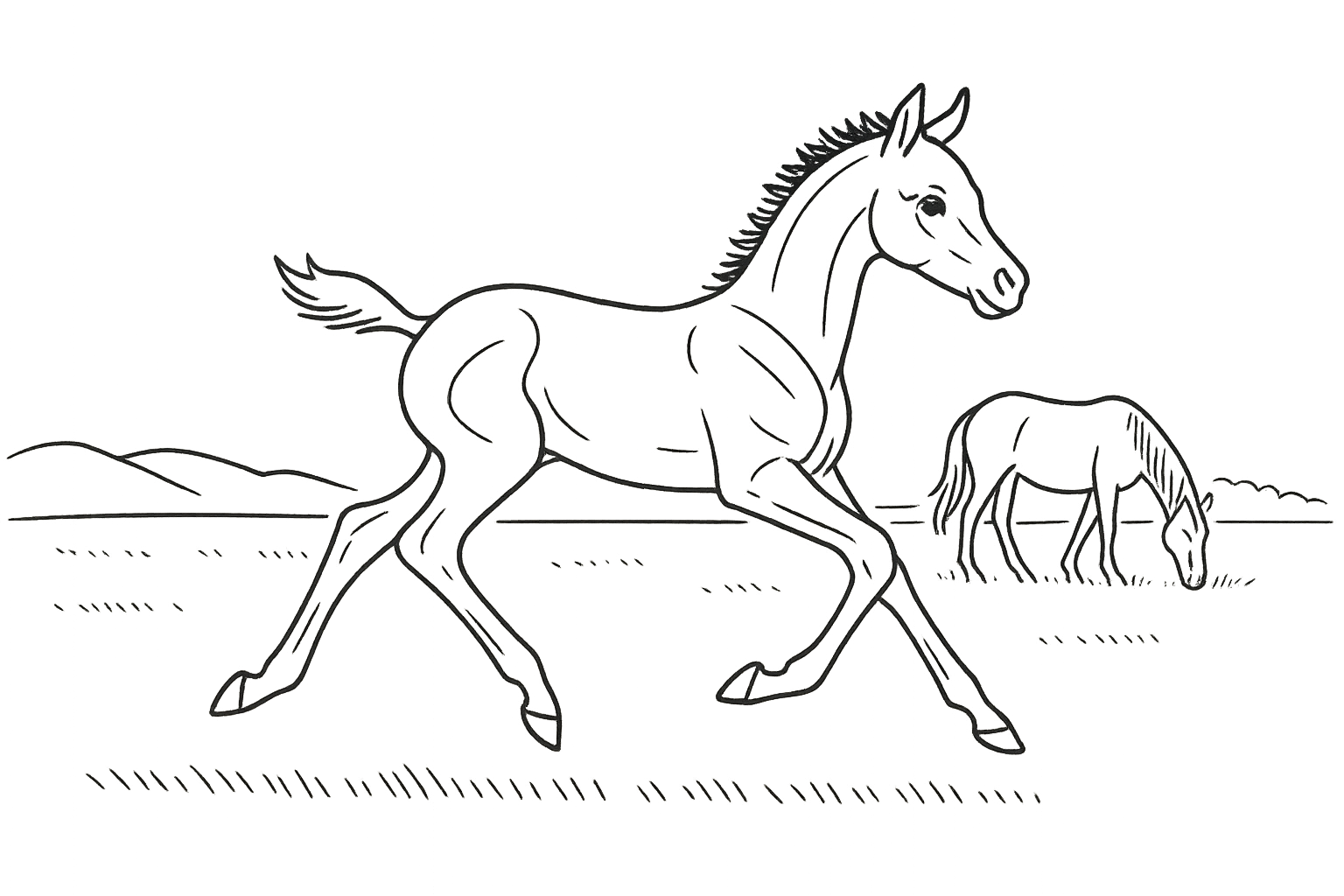
A prospective study tracked 129 foals across six UK Thoroughbred farms from birth to age four. Two early-life factors kept surfacing in the models: average daily turnout hours in the first six months, and total turnout acreage available. Foals with more of both were significantly more likely to reach a race start. Later weaning also predicted more starts overall. The mechanism the authors point to is musculoskeletal loading during the growth window: sustained low-intensity movement across varied ground in the first half-year appears to shape structural development in ways a stalled foal cannot replicate later. The endpoint here is racing, so translation to sport horses is inferential rather than direct, but the underlying biology is not breed-specific. 76% of the cohort raced.
Bottom line
If you're raising a young horse, protect turnout in the first six months the way you'd protect any other structural investment; you cannot backfill it later.
Mouncey R, de Mestre AM, Arango-Sabogal JC, Verheyen KL (2026). Equine Veterinary Journal. DOI: 10.1111/evj.70084.
Older stallions produce foals who race less often and win less often
An Australian retrospective looked at 35 stallions and 33,546 offspring, testing whether sire age at conception correlated with the offspring's later racing career. Foals conceived when stallions were eight years old or younger were more than twice as likely to race at all (OR 2.21, 95% CI 1.93 to 2.52), more than three times as likely to place in a stakes race (OR 3.71), and more than three times as likely to win a stakes race (OR 3.58) compared to foals conceived when their sires were nineteen or older. The authors point to declines in sperm quality and genomic integrity in ageing sires as the likely drivers. The dataset is large enough that the effect is unlikely to be a fluke, though this is racing performance rather than sport-horse suitability, and the older stallions in the study also tended to be higher-value proven sires (which biases in a different direction).
Bottom line
Sire age is a real variable in reproductive decision-making, not just a lifestyle choice for the stallion.
Jenkins C, Upton R, Griffin RA, Swegen A, Hamilton NA, Gibb Z (2026). Scientific Reports. DOI: 10.1038/s41598-026-59342-9.
In sport horses, insulin problems don't look the way you'd expect
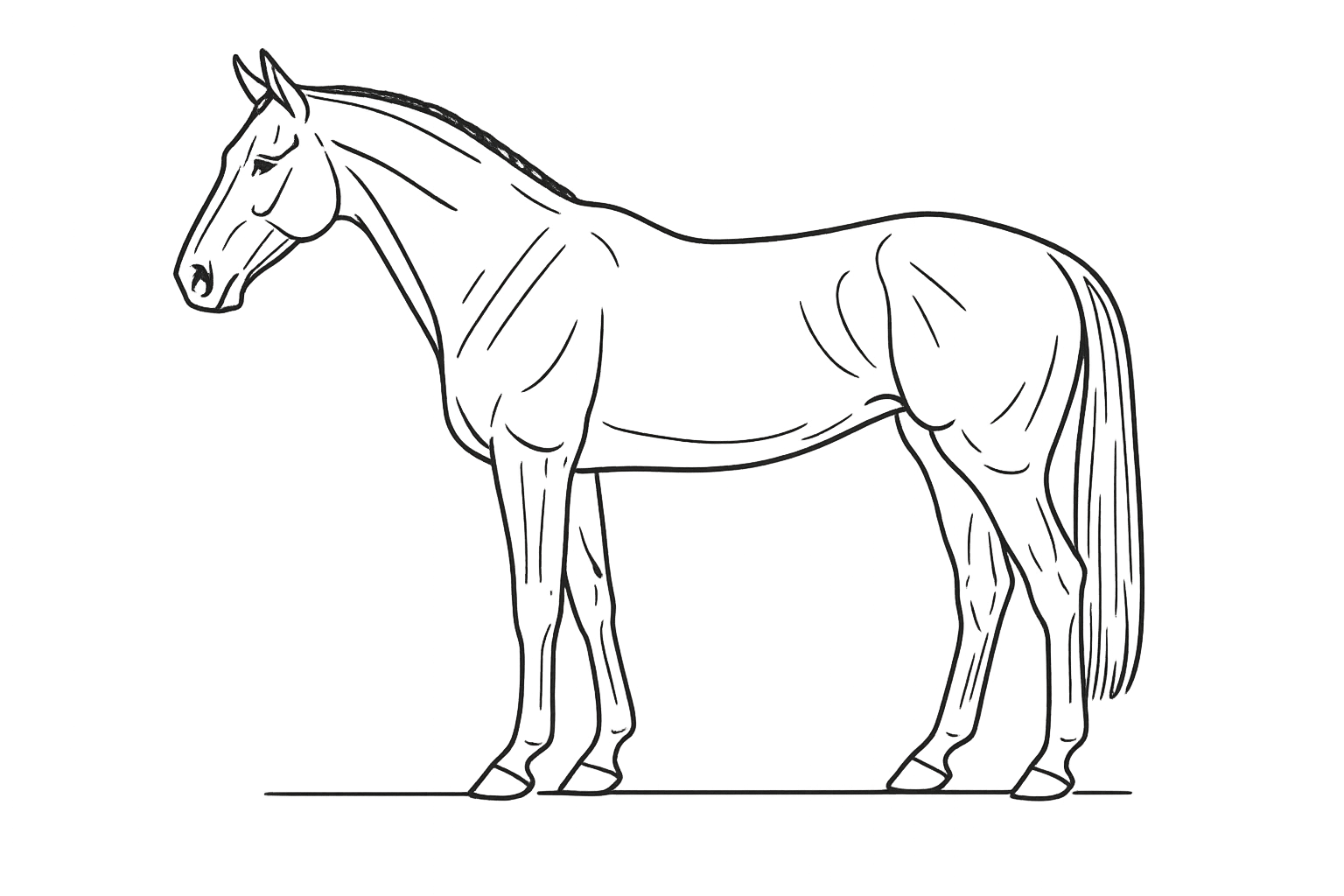
A prospective study tested 180 sport horses using an oral sugar test (a controlled feed of light corn syrup, then serial insulin measurements). 22.8% of horses met the criteria for insulin dysregulation, a metabolic state where the body's insulin response to sugar is exaggerated and prolonged. Only about a quarter of those horses would have been caught by a resting insulin sample alone, which is what most stall-side screens use. The finding that surprised the authors: body condition score, cresty neck, and other physical markers did not predict who tested positive. In this sport-horse population, the horse who looked lean and fit was just as likely to be affected as the horse who looked classically metabolic. A stall-side lateral-flow test correlated well with the lab assay (AUC 0.95), but read on average about 14 units higher, so results need a matching cutoff.
Bottom line
You cannot rule out metabolic trouble by looking at a sport horse; if your horse is showing sub-clinical signs, ask for a dynamic (post-sugar) insulin test, not just a resting one.
Hallowell KL et al. (2026). Equine Veterinary Journal. DOI: 10.1002/evj.70204.
Coming up next issue
We're watching a pipeline on wearable ECG validation in sport horses (not just racehorses), a nutrition-microbiome trial that pushes on the "starch is inflammatory" question further, and early data on whether hair-cortisol kits actually track chronic stress. Back in a fortnight.